
Clean Trenches for Lines That Have to Last
A utility line only performs as well as the trench it sits in. Dug too shallow for the frost line, cut at the wrong slope for a sewer lateral, or backfilled without proper compaction, and the repair often means digging the whole run up again. The trench itself is temporary. The consequences of a bad one are not.
A4 Excavation is a trenching company serving Boise, Eagle, and the surrounding Treasure Valley, cutting clean, correctly graded trenches for water and sewer lines, electrical conduit, and drainage runs. Depth, slope, and bedding are matched to what each line requires and to local code, not guessed at.
For commercial utility runs and residential service lines alike, the goal is a trench the inspector passes and that no one has to think about again. That means calling in locates before the blade goes in the ground, protecting existing lines, and backfilling so nothing settles under a driveway or lawn later.
Have a Line That Needs to Get in the Ground?
What Goes Into a Trench Done Right
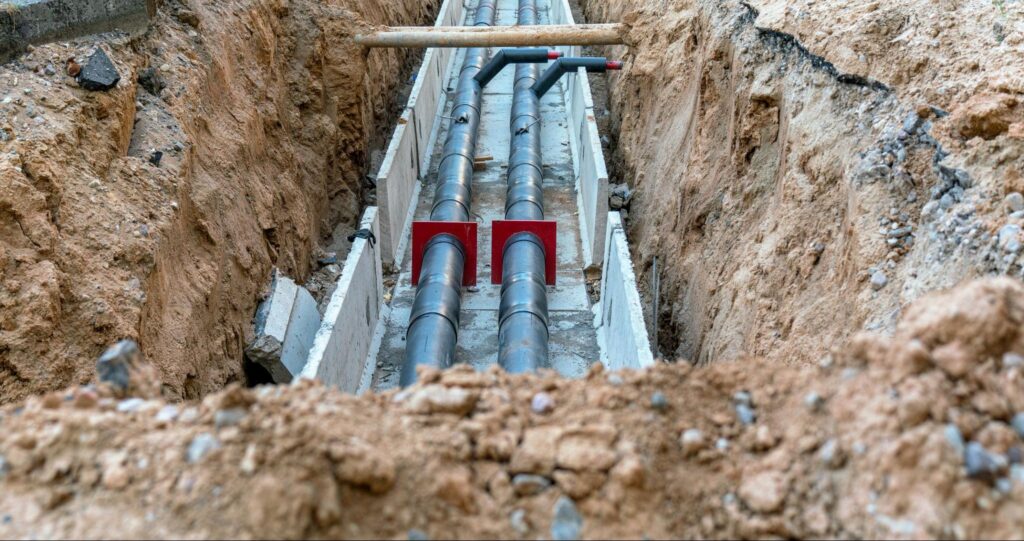
Trenching is the digging of a narrow channel to install and bury a utility or drainage line. The digging itself is often straightforward, but the details around it are what separate a trench that passes inspection from one that fails. Width, depth, and slope all follow the type of line going in, and each has to account for the local frost depth so lines sit below the point where the ground freezes.
A typical run starts with locating existing utilities so nothing already in the ground gets struck. From there the channel is cut to the required depth, the bottom is prepared with bedding material where the line calls for it, and the line is laid at the correct slope. Gravity lines like sewer and drainage need a consistent, precise fall to keep flowing, while pressure and electrical lines carry their own depth and protection requirements.
Once the line is in and inspected, backfill is replaced in layers and is compacted so the trench doesn’t settle into a sunken line across the yard or driveway later. Trenching shows up in almost every kind of project, from a single water service to a home, to drainage runs, to the utility network feeding a commercial building.
The Payoff of a Trench Done Correctly
A trench is buried and forgotten within days, so its benefits are measured almost entirely by what does not go wrong afterward. Getting it right the first time is what keeps a line working for its full lifespan.
- Lines that last: Correct depth, bedding, and slope mean a utility or drainage line performs as designed instead of failing early from poor support or shifting soil.
- No repeat digging: Proper compaction on backfill keeps the ground from settling into a sunken line across the yard or a dip in the driveway, which is the most common reason a finished trench gets reopened.
- Inspections that pass: Matching depth and slope to code the first time avoids failed inspections and the schedule hit that comes with redoing the work.
- Protected existing utilities: Locating what is already in the ground before digging prevents strikes that are dangerous, expensive, and entirely avoidable.
The theme across all of it is simple: a trench you never have to think about again. That reliability comes down to method, which is where the process itself matters.
Have a Line That Needs to Go In Soon?
How a Trenching Job Progresses
A trenching job moves quickly once it starts, but the order of operations is what keeps it safe and up to code.
Locating and Planning
Existing utilities are located and marked before any blade goes into the ground. The path, depth, and slope are planned around what the line requires and what is already buried nearby.
Digging to Spec
The trench is cut to the depth and width the line calls for, accounting for local frost depth so the line sits below the freeze point. Bedding material is added to the trench bottom where the line requires support.
Laying the Line
The line is placed at the correct slope, gravity lines especially, and positioned so it is protected and properly supported along its full length before anything is covered.
Backfill and Compaction
Once the line is inspected, the backfill is returned to the trench and gets compacted in layers so the trench holds its shape. Done right, the surface above stays level instead of sinking into a visible line months later.
Matching the Trench to the Line
Every trench is dug to the line that goes in it, so the method changes with the utility. Depth, width, bedding, and slope are all dictated by what the trench will carry.
Water and sewer lines sit deep enough to stay below the frost line and, in the case of gravity sewer, at a precise and consistent slope so flow never stalls. Electrical and low-voltage conduit follow their own depth and separation requirements and are often bedded in sand to protect the line. Drainage trenches prioritize slope above all, since the whole point is to keep water moving toward its outlet under gravity alone.
Access and ground conditions shape the equipment choice. A narrow trencher cuts clean, consistent channels quickly for smaller lines, while an excavator handles deeper runs, harder ground, and larger-diameter pipe. In rocky or root-heavy soil, the approach adapts to protect both the line and anything already in the ground nearby. The goal never changes: a trench cut to spec, bedded correctly, and backfilled so it stays put.
Trenching That Passes the First Time
The measure of good trenching is boring on purpose: the line works, the inspection passes, and no one has to dig it up again. Getting there depends on discipline more than anything flashy.
A4 Excavation treats the details that make a trench pass, correct depth for the frost line, accurate slope on gravity lines, careful locating, and properly compacted backfill, as the job rather than the fine print. Handling both residential service lines and commercial utility runs means those standards do not change with the size of the project. Locating existing utilities before the blade goes in the ground is treated as non-negotiable, because a strike is the one trenching mistake that is genuinely dangerous rather than just costly.
How deep does a trench need to be?
Depth depends on the line and the local frost depth. Water and sewer lines are buried deep enough to stay below the point where the ground freezes, electrical and conduit follow their own code-set depths, and drainage lines are set by the slope they need. Because the frost line varies by region, matching depth to local code is part of doing the job correctly rather than guessing.
Do you locate utilities before digging?
Always. Locating and marking existing utilities before any digging begins is a non-negotiable safety step. Striking a buried gas, electrical, or water line is dangerous and expensive, and it is entirely avoidable with proper locates. This happens before the blade goes into the ground on every job.
What types of lines can you trench for?
Common trenching work includes water lines, sewer laterals, electrical conduit, and drainage runs for both residential and commercial properties. Each line type has its own depth, slope, and bedding requirements. If you are planning a broader site project, trenching often pairs with our excavation and site prep so the whole scope is handled together.
Why does backfill and compaction matter so much?
Backfill is what keeps the ground above a trench from sinking later. If it is not compacted properly in layers, the soil settles over time and leaves a visible sunken line across the yard or a dip in the driveway. Proper compaction is the difference between a trench you forget about and one you end up reopening.
How long does a trenching job take?
Many residential trenching jobs are completed in a day or two, depending on the length and depth of the run, the soil, and site access. Rocky ground or longer commercial runs take more time. The scope becomes clear once the path and line requirements are confirmed.
Trenching Company FAQs
How deep does a trench need to be?
Depth depends on the line and the local frost depth. Water and sewer lines are buried deep enough to stay below the point where the ground freezes, electrical and conduit follow their own code-set depths, and drainage lines are set by the slope they need. Because the frost line varies by region, matching depth to local code is part of doing the job correctly rather than guessing.
Do you locate utilities before digging?
Always. Locating and marking existing utilities before any digging begins is a non-negotiable safety step. Striking a buried gas, electrical, or water line is dangerous and expensive, and it is entirely avoidable with proper locates. This happens before the blade goes into the ground on every job.
What types of lines can you trench for?
Common trenching work includes water lines, sewer laterals, electrical conduit, and drainage runs for both residential and commercial properties. Each line type has its own depth, slope, and bedding requirements. If you are planning a broader site project, trenching often pairs with our excavation and site prep so the whole scope is handled together.
Why does backfill and compaction matter so much?
Backfill is what keeps the ground above a trench from sinking later. If it is not compacted properly in layers, the soil settles over time and leaves a visible sunken line across the yard or a dip in the driveway. Proper compaction is the difference between a trench you forget about and one you end up reopening.
How long does a trenching job take?
Many residential trenching jobs are completed in a day or two, depending on the length and depth of the run, the soil, and site access. Rocky ground or longer commercial runs take more time. The scope becomes clear once the path and line requirements are confirmed.
Ready to Get Your Line in the Ground?
A utility or drainage line is only as reliable as the trench it sits in. Correct depth, slope, and backfill are what keep it working for its full lifespan instead of failing early.
A4 Excavation provides trenching for water, sewer, electrical, and drainage lines throughout Boise and the Treasure Valley, dug to spec and backfilled to stay put. Get in touch to schedule your project.