
Slope and Water Set the Rules for Moving Dirt in Boise
Maybe you want to build a shop or add onto your home, but your backyard slopes up toward the foothills. Before anything can be built, part of that hill has to be dug out to make flat ground. Or maybe your yard sits lower than the rest of the lot. Water pools there after the sprinklers run, and an irrigation ditch runs along the back fence right where you want to add soil.
Both problems come from how Boise is laid out. The foothills rise along the north side of town, and the Boise River runs through the middle. The city has extra rules for building on steep ground and near water, so any plan to move dirt here has to follow those rules too.
A4 Excavation handles Boise earthworks for homeowners on hillsides and flat lots alike. We dig out and level building sites, reshape yards so water drains the right way, and shape slopes so they stay stable. That way, the crew pouring your foundation, paving your driveway, or planting your yard starts on solid, level ground.
How Earthworks Plays Out on Boise’s Terrace Soils
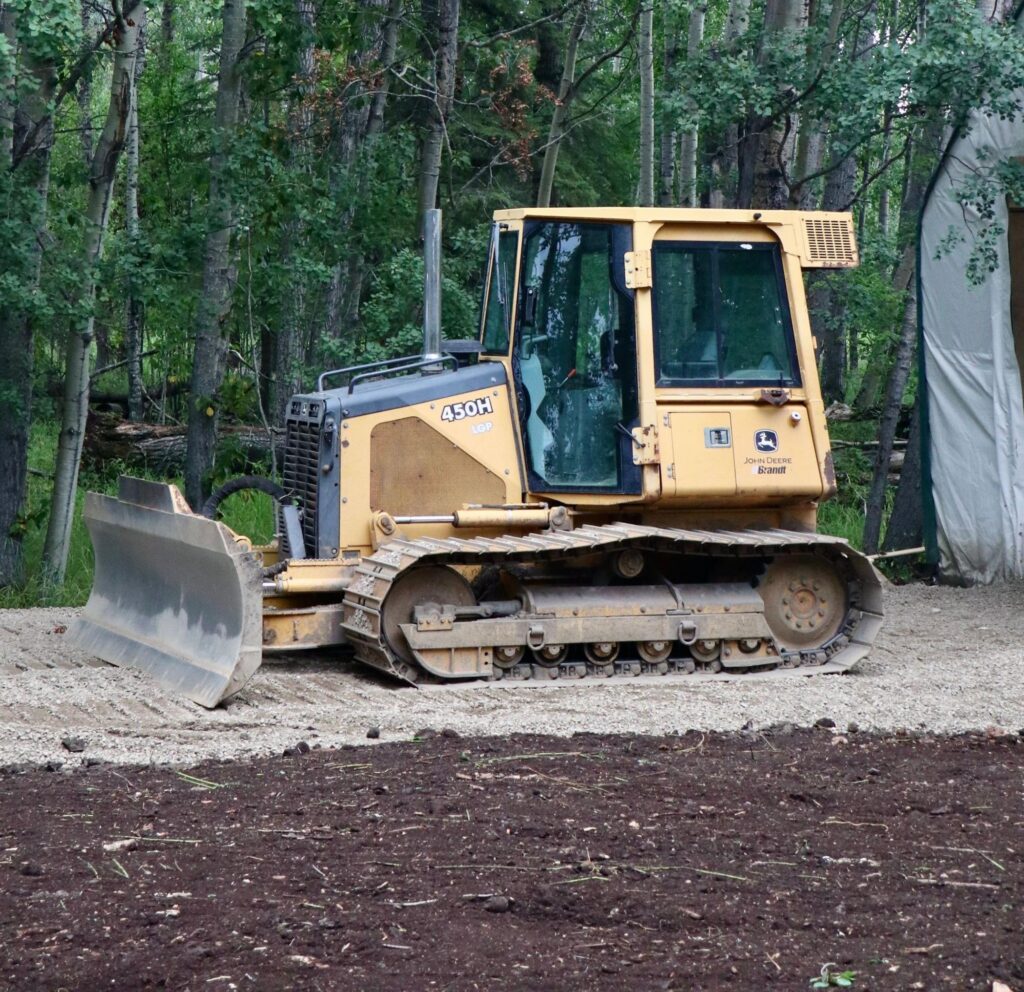
Earthworks means shaping a lot to the elevations it needs. Existing grades get checked against the target, high ground gets cut down, and low ground gets built up with fill. That fill is compacted layer by layer so it can carry weight. Then the surface is finished so water drains away from the house. For a homeowner, the result is usually a level building pad, a yard graded to shed water, or a usable flat area on a lot that used to be all slope.
Soil changes the work from one part of the city to the next. Much of Boise is built on terraces, or benches, that the Boise River left behind as it cut down through the valley. The Boise Bench is one of them. Those terraces hold gravel and cobble, and in places a hard layer of calcium carbonate called caliche. Caliche builds up in dry climates where rain is too light to wash that mineral out of the soil, and Boise averages about 11.5 inches of precipitation a year. A hard caliche layer can take more machine time to break up, and it can slow how fast water soaks down through a finished grade. Closer to the foothills, the ground shifts to older lake and stream sediments, and the city treats much of that hillside ground as erosion-prone.
The dry climate matters once the fill goes down. June through August bring only about an inch of Boise’s yearly precipitation, so native soil is often too dry to compact well on its own. Summer grading jobs often mean adding water to bring the soil to the right moisture before each layer is compacted. The right moisture, thin layers, and testing are what keep a pad from settling after the structure is built on it.
Pads, Benches, and Regrades We Handle
Most residential earthworks jobs fall into one of three groups. Some prepare ground for something new, like a home, shop, or addition. Some correct a yard that was graded poorly the first time. Others turn part of a sloped lot into flat, usable ground.
- Building Pads for Homes and Shops: A level, compacted base is cut or built to the elevation shown on your plans.
- Cut and Fill Grading: Soil from the high side of the lot fills the low side, so less has to be hauled in or out.
- Benching on Sloped Lots: Steps cut into the existing slope give new fill a firm edge to lock into.
- Rough and Finish Grading: Rough grading sets the general shape, and finish grading brings the surface to its final elevations.
- Fill Compacted in Lifts: Fill goes down in thin layers, called lifts, because thin layers compact more evenly than one deep pile of loose soil.
- Yard Regrades for Drainage: Low spots get filled, and the grade gets reworked so water has a clear path off the lot. Pair it with Water Mitigation when standing water keeps coming back.
- Grading Ahead of Retaining Walls: The ground behind and below a wall is cut and prepped before the wall goes in.
Hillside jobs often pair a new grade with a wall to hold it. Under the city’s hillside rules, a retaining wall with more than 4 feet of exposed height, or stacked walls less than 10 feet apart that add up to more than 4 feet, calls for engineered design and a closer review. When a slope calls for a wall, we plan the grade and the Retaining Walls work together and build to the engineer’s design. On lots like these, a few city rules come into play before the first cut.
Planning a Pad, Addition, or Regrade on a Sloped Lot?
Grading, building pads, and drainage regrades for Boise property owners on sloped and flat lots.
What to Check Before Grading Near a Slope or Waterway
Four items shape most of the plan for a grading job in Boise. Checking them early keeps the plan from changing after work starts.
The Steepest Part of the Lot
Boise’s Hillside Development Overlay applies to development on properties where the slope exceeds 15 percent, or where the city finds problems like unstable slopes, expansive soils, springs, or erosion. Landslide areas, expansive or collapsible soils, high groundwater, and slopes over 25 percent cannot be built on unless the project engineer shows the city how those limits will be overcome. Driveways longer than 100 feet or steeper than 15 percent get their own review. Not every sloped lot faces a long process, though. Minor, routine work on a prepared building pad or a single lot, with no significant grading, can qualify for the simplest hillside permit category. At the city’s discretion, it may go straight to the building permit.
Distance to the River or a Canal
The city treats sites within 50 feet of a river, creek, canal, wetland, or tributary as environmentally sensitive, and that brings a more detailed erosion control plan. Residential rough grading on a hillside or floodplain lot also needs a Planning and Zoning approval letter as part of the grading submittal. Measuring the distance from your planned work to the nearest waterway, including an irrigation canal, tells you early whether these extra steps apply.
Ditch Easements
If an irrigation lateral or ditch runs along or across your lot, the ground around it is likely part of an easement held by an irrigation district, canal company, or lateral ditch association. Under Idaho Code 42-1209, no one can place fences, gates, pipelines, structures, landscaping, trees, or other construction in that easement without written permission from the entity that controls it. If unapproved work gets in the way of the ditch, the ditch owner can have it removed and the ditch restored at the expense of whoever put it there, so the request belongs at the start of the project. Recorded easements usually show on the plat or in a title report. Some older ditch rights-of-way may not appear on paper, so if water runs near your lot, call the irrigation entity before grading.
How Much Dirt Is Moving
An erosion and sediment control (ESC) permit is required once 10 cubic yards or more of earth is disturbed. That is about one standard dump truck load. Spreading 4 inches of fill across a 30-by-30-foot area is already about 11 cubic yards. Boise’s rough grading guidance says a grading permit generally applies to cuts deeper than 2 feet, or fills deeper than 1 foot with more than 50 cubic yards of material.
Bring these four questions to your walkthrough. We will go through them with you before any grade is set, so the plan fits the lot and the city’s rules from the start.
Want a Second Look at Your Grade?
We will walk the lot with you and talk through the cut, the fill, and where the water needs to go.
An Owner-Led Crew for Steeper Lots and Flat Yards
A4 Excavation is a registered Idaho contractor and carries liability insurance. Jobs are owner-led, so the owner who walks your lot is also on the job while it gets done. That matters most on a slope. Decisions about how deep to cut, where the fill goes, and how the finished grade meets the neighbor’s yard come up throughout the day. The person making them is the same person who knows the plan.
You also get a straight explanation of what the ground is doing. If a pad needs more fill than expected, or a slope is steeper than it looked from the street, you hear about it plainly and early.
The same crew handles residential and commercial grading. A single backyard regrade gets the same equipment and the same compaction standard as a larger site.
What Lot Are You Working With?
Tell us what you are planning, and we will tell you plainly what the ground will need.
What Local Property Owners Tell Us
⭐⭐⭐⭐⭐
“Marco was awesome and stuck with me until I knew how to use everything. The owner, Jez even came out to review and ensure completion. I got a better price than other bids with exceptional service! Highly satisfied!”
Monte B., Verified Customer
⭐⭐⭐⭐⭐
“Highly recommended! Everyone is friendly and knowledgeable. The work exceeded expectations, and the pricing was super competitive! I’d recommend them to anyone and everyone!”
Nathan C., Verified Customer
Grading Lots Across Boise and Nearby Valley Towns
In Boise, our grading work reaches foothills neighborhoods like the Highlands along Bogus Basin Road and the East End, where homes sit below Table Rock near the Old Idaho Penitentiary. It extends to Harris Ranch, between the foothills and the river near Barber Park, and across Collister, the North End, the Boise Bench, and Southeast Boise. Lots near the Boise River Greenbelt sit closest to the waterway buffers.
Past the city limits, we also take on earthworks in Meridian, Eagle, Star, Kuna, Middleton, Nampa, and Caldwell, along with the rest of the Treasure Valley. The ground flattens toward the western side of the valley, where lots tend to be larger and the job is more often leveling ground and moving water across it than cutting into a slope.
Boise Earthworks FAQs
How can I tell if my lot is steeper than 15 percent?
A 15 percent slope rises 15 feet over 100 feet of horizontal distance. You can estimate it with a tape measure, a level, and string. For permits, the city relies on topographic plans and its own mapped hillside areas. Boise publishes a hillside map layer on its open data site that shows where slopes exceed 15 percent.
What makes soil from my lot unusable as fill?
Roots, construction debris, and rocks too large to compact around are the usual problems. Native soil that comes up in big chunks of caliche, the hard mineral layer found in parts of Boise, usually has to be broken down before it can go back in, or it gets hauled off. When a structure will sit on the fill, the project engineer may call for imported structural fill instead. We will tell you at the walkthrough whether the soil on your lot can be reused.
Do I need an engineer before grading my property?
You need one when the job requires a residential rough grading permit or falls under the city’s hillside rules. In those cases, Boise asks for civil plans stamped and signed by an Idaho-licensed engineer or professional, plus a soils report from an Idaho-licensed engineer, geologist, or soil scientist. A small yard regrade below the permit thresholds, like most Landscape Grading jobs, usually does not need an engineer. We can talk through where your project falls at the walkthrough.
How soon can construction start on new fill?
Building can move ahead once the fill passes its compaction tests and any required inspections. When a grading permit is involved, the city’s rough grading checklist asks for special inspections, such as structural fill and compaction, to be listed on the plans. If a test area comes up short, it is reworked and tested again before the next trade starts.
What should I have ready before a grading walkthrough?
Gather any site or building plans, a survey or plat if you have one, and notes on where water sits after rain or irrigation. Photos of the problem area help too. None of this is required to get started, but it makes the first visit more useful and the estimate more accurate.
Get Your Lot Graded for What Comes Next
The plan starts with a walkthrough. We look at the grade, the soil, and how water moves across the lot. You leave with a clear scope and a sense of what the city may ask for along the way. From there, you decide the next step on your own timeline. Every earthworks project starts with a free, no-obligation estimate. The same crew also handles Excavation for foundations, so the dig and the grade can be planned together. Reach out through our contact page with a few details about your lot, or call and talk through the project first.