
In Boise, a Building’s Age Shapes How It Comes Down
Demolition is the controlled teardown and removal of a house, garage, or outbuilding, done in the order its age, materials, and permits allow. Anyone weighing demolition services in Boise should start with one question: how old is the building? Maybe you bought a 1970s ranch so you could replace it. Or the detached garage behind your bungalow has started to lean.
Boise has 10 historic districts, and most sit in the North End and East End. Inside one, the city requires a Certificate of Appropriateness before a house or even a detached garage comes down. Outside the districts, a house built more than 50 years ago needs a Zoning Certificate first. More homes here went up in the 1970s than in any other decade, so plenty of ordinary houses fall into that group.
A4 Excavation handles teardowns for homeowners and property owners across the city. We check the building’s age, district, and materials on the first walkthrough. Any review gets on the calendar before the teardown does.
Not Sure Which Review Your Building Needs?
Give us the address, and we will check what applies before you commit to anything.
What a Boise Teardown Includes, From Roof to Bare Dirt
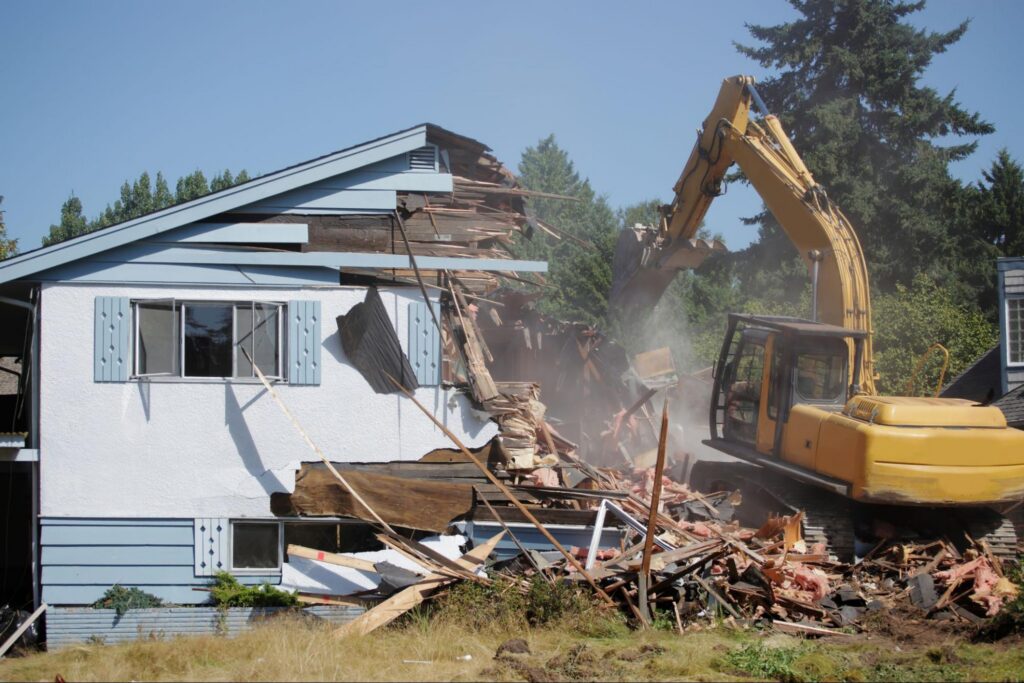
A full teardown starts with the utilities and ends with a filled, rough-graded lot. In between, the structure comes down, the foundation and footings come out, and the debris is loaded and hauled.
Older homes add a step before any of that. Houses built before 1978 may have lead paint, and many mid-century homes used asbestos in siding, floor tile, and insulation. These materials may fall under federal EPA rules, which Boise’s permit application flags. Testing and abatement belong to an accredited specialist. The teardown is scheduled once that work clears.
Because summers here are hot and dry, dust control matters on every teardown.
Houses, Garages, and Other Structures We Take Down
Most residential jobs here involve one of a few building types. Each one changes the equipment, the debris load, and the permit path.
- Whole Houses: The structure, foundation, and footings come out in one job.
- Detached Garages and Carports: Freestanding buildings come down without disturbing the house beside them.
- Sheds and Shop Buildings: Smaller outbuildings clear with less equipment and a lighter debris load.
- Concrete Slabs and Driveways: Old concrete gets broken out and hauled off before a regrade or new pour.
- Small Commercial Buildings: Light commercial structures come down on lots being cleared for a new use.
Whatever the structure, we size the equipment to it and leave the lot clean and level. Removing only part of a house, such as an addition, runs under a separate city permit, so we sort that out at the walkthrough. A full teardown follows its own set of steps.
Planning to Clear a Lot or Just One Building?
How a Demolition Permit Moves From Application to Bond Release
Boise’s process for a full residential teardown runs in a set order.
Planning Review Comes First
After the application goes in, city planning staff review it first. A building inspector then sets the bond amount, sometimes after a site visit. The owner or an authorized representative signs the application.
The Sewer Connection Gets Its Own Permit
Most Boise teardowns need a separate sewer cap permit. The connection to the city sewer is capped before the structure comes down.
Erosion Control Comes Before the First Swing
Residential demolition also needs an erosion and sediment control (ESC) permit. The permit applies once the work disturbs 2 cubic yards of soil or more.
The Bond Comes Back After Final Inspection
The city requires a bond before the permit is issued. It protects the city if a job is left unfinished. Once the final inspection passes, you or your contractor ask the Permit Desk to release it.
A4 Excavation walks through each step with you at the estimate, so you know who files what and when.
Why Homeowners Trust A4 With the Teardown and the Dig After It
A4 Excavation is a licensed and insured Idaho excavation contractor. Whether you have a garden shed or a full house demolition project, each job gets the same walkthrough and the same cleanup.
The crew that takes a house down can also dig for what replaces it. A4 handles foundation excavation, utility trenching, and land grading. One contractor carries the lot from a standing structure to an open foundation hole. Concrete and framing then go to the trades that finish them.
What Boise Customers Say About Our Projects
⭐⭐⭐⭐⭐
Monte B., Verified Customer
“Marco was awesome and stuck with me until I knew how to use everything. The owner, Jez even came out to review and ensure completion. I got a better price than other bids with exceptional service! Highly satisfied!”
⭐⭐⭐⭐⭐
Isabella M., Verified Customer
“I know Jezrael and his team and they are good, trustworthy people. Excellent work ethic, you’ll be happy with their service!”
Ready to See Your Lot Cleared?
Demolition From Warm Springs Avenue to Bown Crossing
Our demolition work reaches from the city’s oldest streets to its newer edges. Near downtown, that includes homes along Warm Springs Avenue and Harrison Boulevard and the blocks around Julia Davis Park.
Farther out, we work in Collister, in Southeast Boise around Bown Crossing, and on commercial lots near the Boise Airport. Past the city limits, A4 takes on demolition in Kuna, Star, and the rest of the Treasure Valley.
Boise Demolition Services FAQs
Can I keep the slab or driveway when the house comes down?
Yes, if the city approves it before the permit is issued. Boise requires a written request to leave existing building surfaces on site, approved by Planning and Development Services. If you plan to build on an old slab, have your builder or engineer check its condition before you make the request.
Does a demolition permit let me start building right away?
No, a demolition permit covers the teardown only. Any new house, garage, or addition on the parcel needs its own building permit. Talk with your builder about timing the two, so the lot does not sit empty longer than you planned.
What happens if there is an old fuel tank on the property?
An underground fuel or storage tank needs its own Fire Permit in Boise. Some older homes still have a buried heating oil tank that no one remembers. If you spot a fill pipe or vent pipe in the yard, point it out at the walkthrough so the tank is part of the plan.
Can I salvage lumber, fixtures, or brick before the teardown?
Surface-level salvage may be allowed before the demolition permit is issued. That covers materials pulled for reuse or recycling. Check with the city before removing anything structural, since that work falls under the permit itself.
What sets the city’s fee for a residential demolition permit?
Boise bases the fee on the total value of the demolition work listed on the permit application. That value includes overhead and profit, and fees are assessed once the bond is set. The fee goes to the city, separate from the contractor’s price.
Get a Clear Teardown Plan for Your Boise Lot
Reach out, and we will meet you on site to walk the building. You get a clear scope and price for the teardown and any dirt work after it. What happens next is your call.