
Boise’s Mix of Old and New Changes How a Trench Gets Dug
Some older Boise properties carry the same kind of trouble year after year: a sewer lateral that backs up without warning, a water line that has already been patched once, a stretch of lawn that never settled right after excavation. The trench underneath is often the real source. When a trench is cut too shallow, sloped wrong, or backfilled without enough compaction, it can fail long before the pipe inside it does.
A4 Excavation is a Boise, ID trenching company working across the city and the Treasure Valley, including the North End and the Boise Bench. Much of the North End was built during a building boom that started in 1891, and much of the Boise Bench was farmland until it was subdivided after World War II. A line put in decades ago, or added later by a past owner, may not match any record on file, and Idaho 811 (the free call-before-you-dig service) does not mark private lines. That gap matters more on these lots than on a newer build.
Some newer lots sit on former farmland near working canals and laterals, like the New York Canal and the Ridenbaugh Canal. Ground near a ditch can hold more water during irrigation season, and any line that crosses a ditch easement needs written permission from the irrigation district first.
Planning a New Line on an Older Boise Lot?
Tell us what you are working on, and we will get you on the schedule for a site visit.
What Trenching in Boise Actually Involves
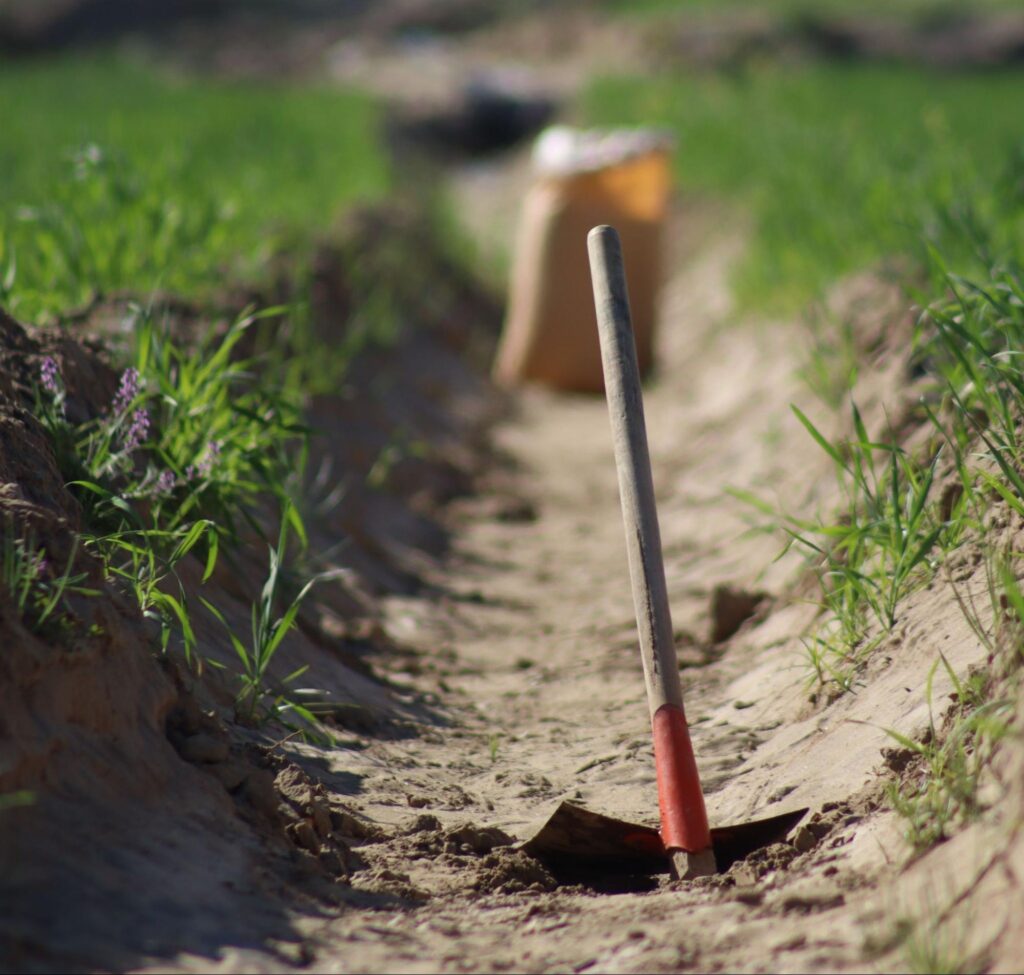
Trenching means digging a narrow channel to bury a water, sewer, electrical, or drainage line. The channel itself is simple. Whether it holds up depends on the depth, slope, bedding, and backfill, and each of those has to match the line going in and meet code.
Timing plays a role too. Boise’s frost line is 24 inches under city code, and the ground is most likely to be frozen from November through February, when average nightly lows sit below freezing. Frozen soil is slower to cut through and changes how a job moves. A trenching job planned around that window tends to stay on schedule, while one planned against it usually does not.
Soil is the other variable. Much of the Boise Bench sits on old river terraces, where a hard, cemented layer called hardpan or caliche can show up 1 to 2 feet down. Closer to the Boise River, the ground turns to gravel and river cobble. So depth and bedding get set on site, not assumed ahead of time.
What We Trench For
A single property can need more than one type of line in the ground, and each one has its own depth and slope requirements.
Water Service Lines: Set below Boise’s 24-inch frost line and left open for inspection and testing before backfill.
Sewer Laterals: Graded at a steady fall of at least 1/4 inch per foot so waste moves toward the main instead of sitting in the line.
Electrical Conduit: Set to the cover depth code and Idaho Power require, which is at least 30 inches for a new Idaho Power service line.
Drainage and Downspout Lines: Sloped to carry water away from the foundation and out to where it is meant to go.
Whichever line is going in, the depth, slope, and bedding are set to match it and to code, not to a one-size approach.
Planning a Water, Sewer, or Drainage Line?
We will walk the site, check what is buried, and scope the trench to the line going in.
Locating Matters More on Older Boise Lots
Every trenching job starts with locating what is already buried, and that step carries more weight on an older Boise property. A newer subdivision usually has utility records on file. A lot built several decades ago may not, so we call in locates before we dig and check the ground along the path instead of assuming every old line is on a map.
Boise winters add a second layer to this. The ground freezes and thaws through the cold months, and backfill that was compacted in layers holds its shape through that cycle. Backfill that was rushed is more likely to settle, and that is where a low, uneven strip along the line’s path tends to show up months later.
That is why A4 Excavation treats locating and compaction as the two steps worth the most attention on a Boise trenching job, ahead of anything about the dig itself.
Why Boise Property Owners Call A4 Excavation
A4 Excavation is a registered and insured Idaho contractor. Every trenching job is scoped and priced to the site, not to a package. That holds whether the job is one water line for a home on the Boise Bench or a multi-line run for a commercial site.
No job is too big or too small, and A4 stays hands-on from the first walkthrough to final grade. A single residential line and a larger commercial run get the same attention to depth, slope, and backfill, and the property is left clean and level once the work is done.
What Our Customers Are Saying
⭐⭐⭐⭐⭐
“Marco was awesome and stuck with me until I knew how to use everything. The owner, Jez even came out to review and ensure completion. I got a better price than other bids with exceptional service! Highly satisfied!”
– Monte B., Google Review
⭐⭐⭐⭐⭐
“I couldn’t be happier with the work A4 Excavation did. From start to finish, they were professional, honest, and incredibly easy to work with. They showed up when they said they would, communicated throughout the project, and the quality of their work exceeded my expectations. It’s hard to find contractors who take this much pride in what they do, but their attention to detail and work ethic really stood out. If you’re looking for an excavation company that does outstanding work at a fair price, I highly recommend A4 Excavation. I’ll definitely be using them again for future projects.”
– Nathan H., Google Review
Have Questions Before You Schedule?
Call or send us the details, and we will walk through what your line and your lot need.
Trenching Across the Boise Area
A4 Excavation trenches properties throughout Boise, including the North End and the Boise Bench, along with nearby Treasure Valley communities like Eagle and Meridian. Whether the property sits on an established Boise street or a newer lot closer to the valley’s edge, the crew scoping the job is the same one handling excavation, drainage, and grading work across the region.
That range matters on trenching jobs specifically, since a line rarely stands alone. A drainage trench often runs alongside a grading fix, and a water line dig sometimes turns up a slope issue worth addressing at the same time. Having one crew handle both means fewer separate contractors on the same property.
Boise, ID Trenching Company FAQs
What determines the cost of a trenching project in Boise?
Cost depends mainly on line length, depth, soil conditions, and site access, so one flat number rarely fits every property. Hardpan on the Boise Bench or river cobble near the Boise River takes longer to dig than open soil, and a long commercial run costs more than a short residential line. A free site visit is the only way to get an accurate figure.
Do I need a permit for trenching on my Boise property?
Yes, most utility trenching in Boise needs a permit, and the permit follows the line. Sewer and water service lines need a City of Boise plumbing permit, electrical runs need an electrical permit, and digging in the street right-of-way needs an Ada County Highway District (ACHD) permit. The licensed trade contractor usually pulls the trade permit, and A4 walks through what your job needs during the estimate.
Does a trenching crew need special access to my property?
Sometimes. Access matters most on tighter lots, especially in older Boise neighborhoods with narrow side yards or landscaping close to the house. Gates and tight spaces can call for smaller equipment, so we check access during the estimate and bring the right machine from the start.
Will trenching disturb my landscaping or driveway?
Some disruption to the surface is unavoidable since the trench has to be cut where the line needs to run. The channel is kept as narrow as the job allows, and backfill is compacted so the surface settles back to level instead of leaving a low spot later.
Do I need to call 811 before trenching in Boise?
Yes. Idaho law requires a call to Idaho 811 at least 2 business days, and no more than 10 business days, before digging, with the dig path marked in white paint. Utilities then mark their public lines. Private lines past the meter, like a line to a shop or sprinkler system, are not marked, so they need to be located separately.
Ready to Schedule Your Boise Trenching Project?
Reopening a trench costs more than doing it right the first time. You pay for the repair and for the yard or driveway that has to be dug up again.
If the trench is part of a bigger drainage fix, our water mitigation work can be scoped on the same visit. Tell us about your project, and we will set up a time to walk the site.