
Quick Answer
Pool and pond excavation is the dirt work homeowners and commercial property owners need before a pool or pond can be built.
The crew digs the basin to the planned depth and shape and grades the ground around it.
Idaho requires an 811 utility locate request at least two business days before digging. A4 Excavation scopes each dig on site.
Pool and Pond Excavation Starts With the Right Dig
Pool excavation and pond excavation in the Treasure Valley usually start the same way: you have plans from a pool builder or a sketch of a backyard pond, and you need the ground ready before anyone can build. The dig has to match those plans, down to the depth of the deep end and the slope of the banks. A rushed or uneven dig can lead to a torn liner, settling around the edge, or water collecting in the wrong spot.
A4 Excavation handles this dirt work for homeowners and commercial property owners. We dig, grade, and shape the basin to the plans, and we scope every job to the actual site instead of selling a set package. That gives the pool or pond builder solid, graded ground that matches the design.
Planning a Pool or Pond Project?
If you have the dimensions or a rough layout, we can walk the site with you and talk through what the dig will cover.
What Does Pool and Pond Excavation Involve?
Pool and pond excavation involves clearing the site, stripping topsoil, digging the basin, grading, and cleanup, all to the plans for width, depth, slopes, shelves, and perimeter elevations (the height of the ground around the edge). Pool and pond digs are one part of our broader excavation services, and A4 handles the dirt work only. The pool builder, pond installer, plumber, and electrician handle the shell (the concrete or fiberglass body of a pool), the liner, the plumbing, and the wiring.
A swimming pool excavation follows the pool builder’s plans for the type of pool going in, whether it is concrete, fiberglass, or vinyl liner. We cut the main basin and shape the steps, transitions, and slope toward the deep end the design calls for.
A pond excavation works differently. Some designs call for gradual banks, some for shallow planting shelves along the edge, and some for a deeper pocket in the middle. The ground around the pond is graded so runoff moves away from the banks instead of washing soil into the water.
Why Precise Excavation Matters for Your Pool or Pond
A careful dig affects how the finished pool or pond holds up, not just how it looks. Here is what accurate dirt work does for the build.
- Stable basin walls: We cut the slopes and depth the design calls for, which helps keep the walls from sloughing (caving in) before the next crew builds.
- Fewer low spots: Shaping the floor and banks to the plans avoids low spots where water sits and silt settles.
- Firm ground around the edge: Compacted, graded soil gives the builder a stable base for the deck and coping (the cap along the pool edge), which lowers the risk of settling later.
- Water that moves the right way: Finish grades around the basin send runoff away from the edge and away from the house.
Whether you are putting in a swimming pool or a backyard pond, the dig is the one part of the build that is hard to fix once the next trade starts.
Not Sure What Your Ground Will Need?
A walkthrough shows access, soil, and drainage before any digging begins.
What to Expect During a Pool or Pond Excavation
Most pool and pond excavation jobs move through four stages. The order and timing shift with the soil, the slope of the lot, equipment access, and the design.
Step 1: Site Walkthrough and Staking
We walk the site with you, compare the plans to the actual ground, and check equipment access, including whether a fence section has to come out for the machine to get through. Then we stake and paint the outline of the basin. Before any digging, we request utility locates through 811, and the utility owners mark their buried lines. Private lines, like sprinkler pipe or power run to a shed, are not marked through 811, so it helps to point those out at the walkthrough.
Step 2: Clearing and Stripping Topsoil
We clear grass, roots, and debris, then strip the topsoil (the dark, loose top layer of soil). Good topsoil is often stockpiled on site and spread back during finish grading instead of being hauled away.
Step 3: Digging the Basin
We dig the basin to the depth and shape on the plans. For a swimming pool excavation, that means the shallow end, the slope, and the deep end. For pond digging, it means the shelves, banks, and center pocket. Around the basin, we use cut and fill (moving soil from high spots to build up low ones) to set the grade for the deck, patio, or landscaping. The extra dug soil, called spoil, is either kept for backfill and grading or hauled off.
Step 4: Finish Grading, Compaction, and Cleanup
We trim the basin to its final shape, compact any fill around the edge, and set the finish grade so water drains away from the basin. Then we clean up the work area so it is ready for the pool builder or pond installer to start.
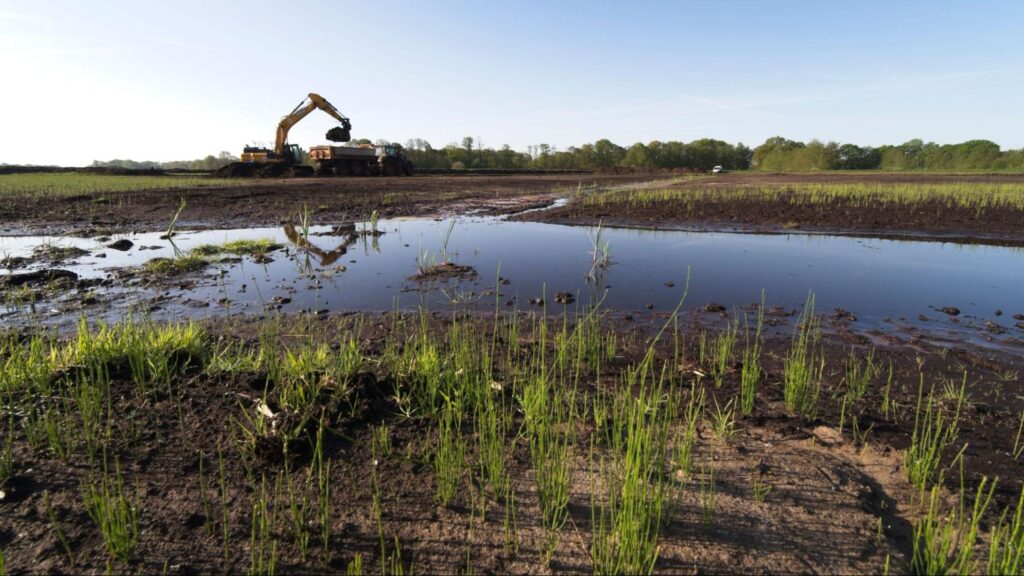
Excavation Techniques for Pools and Ponds
The right approach depends on the soil, the design, and how much room the equipment has to work. These are the most common techniques for pool site preparation and pond excavation.
Bulk Excavation
An excavator removes most of the soil to match the depth and shape on the plans. On tight backyard lots, a compact excavator may be the better fit so it can get through the access point.
Shelf and Step Shaping
For pond excavation, we cut shallow shelves along the edge for plants and a deeper pocket for fish or aeration. For swimming pool excavation, we shape the steps, benches, and deep end the design calls for.
Rock and Obstacle Removal
Some lots hit hardpan (a hard, cemented layer of soil), large rock, buried concrete, or old footings. These get broken up and removed so the dig can reach the planned depth.
The main dig is only part of the job. Depending on the design, it can also include finish grading, hauling spoil, and Trenching for the plumbing and electrical lines that run to the pool or pond equipment.
What Affects the Cost of Pool and Pond Excavation?
The cost of pool or pond excavation comes down to how much soil has to move and how hard it is to move it. Two digs for the same size pool can price very differently depending on the lot, so an accurate number starts with seeing the site.
- Basin size and depth: A bigger or deeper basin means more cubic yards of soil to dig, which adds machine time and more spoil to manage.
- Equipment access: A narrow side yard, a fence that has to come down, or a tight path to the backyard can call for smaller equipment and a slower dig.
- Soil and what is buried in it: Hardpan, rock, tree roots, or old concrete take longer to break out than loose soil.
- Where the dug soil goes: Spoil that stays on site for grading usually costs less to handle than spoil that has to be loaded and hauled off.
- Groundwater: Wet ground or a high water table can slow the dig and may mean pumping water out of the basin before work continues.
- Shape and detail: Steps, planting shelves, and sloped banks take more careful cutting than a simple rectangle.
The most accurate way to price your dig is a walkthrough, where we look at the ground and the plans together before giving you a number.
An Owner-Led Crew for Every Pool and Pond Dig
A4 Excavation is a registered and insured Idaho contractor, Registration #076774. Every job is owner-led and hands-on, so the plans reviewed at your walkthrough are the plans the crew digs to. On a pool or pond, where a few inches of depth or a misplaced bank changes the whole build, that consistency matters.
The same crew handles residential and commercial work, from a backyard pool dig to a larger pond on a commercial property or acreage. Tight backyards with fences and sprinkler lines take a different approach than open sites where the sheer volume of soil is the challenge, and the crew works both.
There is no minimum job size. A small backyard pond gets the same planning as a large pool dig, and every job is scoped to the actual site instead of a set package.
What Property Owners Say About the Finished Site
⭐⭐⭐⭐⭐
– Nathan C., Verified Customer
“Highly recommended! Everyone is friendly and knowledgeable. The work exceeded expectations, and the pricing was super competitive! I’d recommend them to anyone and everyone!”
⭐⭐⭐⭐⭐
– Norman H., Verified Customer
“I couldn’t be happier with the work A4 Excavation did. From start to finish, they were professional, honest, and incredibly easy to work with. They showed up when they said they would, communicated throughout the project, and the quality of their work exceeded my expectations. It’s hard to find contractors who take this much pride in what they do, but their attention to detail and work ethic really stood out. If you’re looking for an excavation company that does outstanding work at a fair price, I highly recommend A4 Excavation. I’ll definitely be using them again for future projects.”
Ready to Talk Through Your Pool or Pond Dig?
Tell us what you are planning, and we will set up a time to walk the site.
Pool and Pond Excavation Around the Treasure Valley
A4 Excavation handles pool and pond excavation across the Treasure Valley, including Boise, Meridian, Eagle, Nampa, and Caldwell, along with the smaller communities around them.
The ground is not the same everywhere in the valley. Some lots hit caliche (the valley’s version of hardpan) a few feet down, and lots near the Boise River or irrigation canals can run into groundwater during the dig. Older neighborhoods like the North End and the Boise Bench often have tighter side yards and mature trees that shape how equipment gets in. We check for all of it at the walkthrough so the estimate reflects your actual ground.
Pool and Pond Excavation FAQs
How deep does pool or pond excavation need to go?
Most residential pool digs run about 3 to 4 feet at the shallow end and 5 to 8 feet at the deep end, plus a little extra for the shell or base. For ponds, planting shelves are often 8 to 12 inches deep, while ponds with fish need at least 2 to 3 feet. Your plans set the exact numbers.
Is hauling away the dirt included in a pool or pond excavation estimate?
Haul-off can be included or priced as a separate line, and a clear estimate spells out which. Some of the dug soil can often stay on the property for backfill or finish grading, and the rest may need to be hauled off. When comparing bids, ask each contractor to show haul-off separately.
Do I need permits before excavation starts?
Most in-ground pools need a building permit, and the dig itself can need its own permit. In Boise, disturbing 10 cubic yards or more of soil requires an erosion and sediment control permit from the City of Boise. Ponds that hold groundwater or diverted water may also need a water right from the Idaho Department of Water Resources. We confirm what applies at the site visit.
How does A4 Excavation manage drainage during a pool or pond dig?
We keep water out of the open basin and runoff off the house and neighboring lots while the dig is underway. That means placing spoil piles where rain will not wash them back in, and pumping out groundwater if it seeps into the basin. At finish grading, we slope the ground so runoff drains away from the basin.
How long does pool or pond excavation take?
Most residential pool digs take about one to three days once the equipment is on site, and a small backyard pond can often be dug in a day. Larger ponds, tight access, rock, wet weather, and haul-off can stretch the schedule. We give you an expected timeline with your estimate.
What areas does A4 Excavation serve for pool and pond excavation?
A4 Excavation takes pool and pond excavation jobs across the Treasure Valley, including Boise, Meridian, Nampa, Caldwell, Eagle, Star, Kuna, and Middleton, plus the North End and the Boise Bench neighborhoods in Boise. You can see every area we cover on our service area page.
Get a Clear Plan for Your Pool or Pond Dig
When you reach out, we set up a walkthrough at your property. We look at the plans with you, check access, soil, and drainage, and give you a free estimate for the dig with no obligation.
The number you get is built around your lot and your plans, not a package price. To get started, send us your project details through our contact page or call (208) 794-7431.