
Keep Water Moving Away From What Matters
Water shows up where you do not want it. It pools in the low corner of the yard, creeps toward the foundation after a spring melt, or turns a stretch of the property into standing mud that never quite dries. Most of the time the cause is the same: the ground is carrying water toward the structure instead of away from it.
Drainage excavation is the fix. By reshaping the grade and installing the right below-ground drainage, A4 Excavation redirects surface and subsurface water away from foundations, driveways, and usable yard space for properties across the Treasure Valley. This is water management through earthwork, not water-damage cleanup, so the work solves the cause instead of chasing the symptom.
Runoff off the foothills, a seasonally high water table in some pockets, and the region’s dense irrigation network all push water across local properties in ways that are easy to underestimate. Handling it correctly protects the most expensive parts of a property from the kind of slow, ongoing damage that rarely announces itself until it is costly.
Tired of Water in the Wrong Places?
The sooner water is redirected, the less it costs to undo the damage.
How Drainage Excavation Redirects Water
Drainage excavation solves water problems by changing where water goes, using the shape of the ground and buried drainage rather than pumps or sealants. The work usually begins by identifying where water collects and where it needs to end up, then reshaping the grade so the surface carries runoff away from structures and toward a safe outlet.
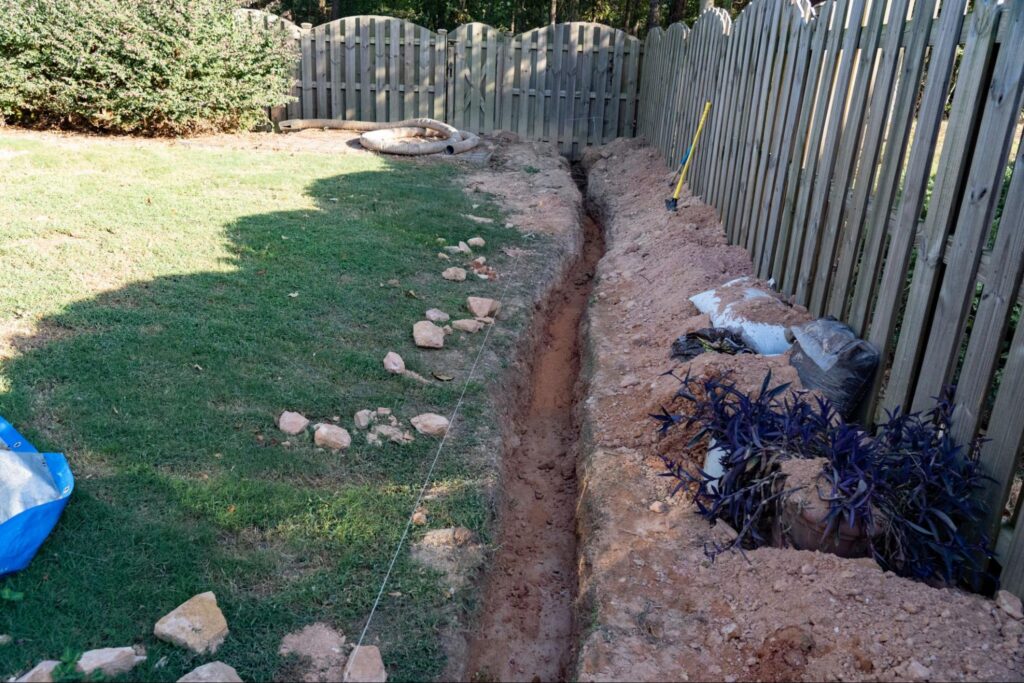
Below the surface, the solution often includes a French drain, a buried perforated pipe set in gravel that collects subsurface water and moves it downhill, along with catch basins, channel drains, or a daylight outlet where the water can safely discharge. The right combination depends on the soil, the slope, and how much water the property actually sees during a wet stretch.
Common situations include water pooling against a foundation, a yard that stays soggy long after rain or irrigation, a wet spot at the base of a slope, or a crawlspace that keeps taking on moisture. In each case the aim is the same: intercept the water before it reaches what it can damage and give it a clear path somewhere else.
What Solving Your Drainage Actually Protects
Redirecting water is not really about the water. It is about everything the water reaches. When drainage is handled at the source, the payoff shows up across the whole property, starting with the parts that cost the most to repair.
Keeping water away from the foundation is the big one. Persistent moisture against a foundation can lead to cracking, settling, and a wet crawlspace or basement, and those repairs dwarf the cost of getting the grading and drainage right. Move the water and you protect the single most expensive component of the property.
The rest of the yard benefits too. Ground that drains no longer stays soggy, which means usable lawn instead of a mud pit, healthier plantings that are not sitting in standing water, and hardscaping that is not being slowly undermined from beneath. Erosion slows down as well, since controlled water is no longer free to carve channels through the property.
There is a quieter benefit worth naming: peace of mind during a wet stretch. Once the water has a clear path away from where it can do harm, a heavy melt or a long rainy spell stops being something to watch nervously from the window. That reliability is what leads naturally into how the work gets done.
Stop Guessing Where the Water Is Coming From
Signs Your Property Needs Drainage Excavation
Water problems tend to announce themselves in small ways before they become expensive ones. A few common signs are worth watching for.
Water Pooling Near the House
Puddles that linger against the foundation after rain or irrigation are a clear signal that the grade is directing water toward the structure instead of away from it.
A Yard That Stays Wet
Soggy ground, standing water, or a lawn that stays mushy long after the last rain usually points to poor surface drainage or a high water table with nowhere to go.
A Damp Crawlspace or Basement
Moisture, musty smells, or visible water intrusion below grade often trace back to water collecting against the foundation from outside.
Erosion and Washouts
Channels cut into the soil, exposed roots, or mulch and gravel that keep migrating downhill show that uncontrolled runoff is actively moving material across the property.
Catching any of these early keeps a manageable grading fix from becoming a foundation repair.
Drainage Solutions and When Each One Fits
There is no single drainage fix, because water reaches a property in different ways. Surface water runs across the top of the ground, while subsurface water moves below it, and the right solution usually combines methods to handle both.
The starting point is almost always grading, reshaping the surface so water sheds where it should. From there, buried solutions handle what grading alone cannot. The table below lays out the common options and where each one fits.
| Solution | What It Does | Best For |
|---|---|---|
| Surface grading | Reshapes the ground so runoff flows away from structures | Water pooling near the foundation or in low spots |
| French drain | Buried perforated pipe in gravel that collects and redirects subsurface water | Soggy yards, seepage, water moving underground |
| Catch basin | Collects surface water at a low point and ties into a drain line | Persistent puddling in a defined area |
| Channel drain | Surface grate that intercepts water across a run | Driveways, patios, and paved areas |
| Dry well | Underground chamber that lets collected water disperse into the soil | Sites without a clear downhill outlet |
The right combination depends on the soil, the slope, and how much water the property actually handles in a wet stretch. Clay-heavy ground drains slowly and often needs more engineered redirection than sandier soil, which is part of why a site visit matters before committing to any one approach.
Drainage Work That Fixes the Cause
Plenty of contractors will sell a drainage product. Fewer start by figuring out where the water is actually coming from and where it genuinely needs to go, which is the part that determines whether the problem is solved or just relocated.
That diagnostic approach is where A4 Excavation focuses on this work: reading the grade, the soil, and the water’s path before recommending a fix, so the solution matches the property instead of a default template. Local knowledge carries real weight here, since foothill runoff, irrigation, and the valley’s clay-heavy ground all shape how water behaves on a given lot. The result is drainage designed for the cause rather than the symptom, which is what keeps a fix from becoming a recurring expense.
What is the difference between water mitigation and water damage restoration?
They solve different problems. Water damage restoration is cleanup after water has already gotten inside, drying out and repairing what was damaged. Drainage excavation is preventive earthwork: it reshapes the ground and installs drainage so water is redirected away from the structure before it can cause damage. This work is about stopping the water at its source, not cleaning up after it.
How do I know if I need drainage work?
Common signs include water pooling near the foundation after rain or irrigation, a yard that stays soggy long after the last rainfall, a damp or musty crawlspace, and erosion channels forming across the property. Any of these suggests water is moving toward the structure or collecting where it should not. Catching it early keeps a grading fix from turning into a foundation repair.
What is a French drain and when do I need one?
A French drain is a buried perforated pipe set in gravel that collects subsurface water and carries it away to a safe outlet. It works well for soggy yards, seepage, and water moving underground where surface grading alone will not solve the problem. Whether it is the right fit depends on the soil, the slope, and where the water needs to end up. It often pairs with broader excavation and site prep when the whole property is being reworked.
Will drainage excavation fix a wet basement or crawlspace?
Often, yes, when the moisture is coming from water collecting against the foundation outside. Redirecting that water away from the structure with grading and drainage addresses the outside source. Some below-grade moisture issues also need interior measures, so the outside water is the first thing to rule out and correct.
How long does drainage work take?
Most residential drainage projects are completed within a few days, though it depends on the size of the property, the solution involved, and the soil. A simple regrade is faster than a full French drain system with multiple outlets. A site visit gives a realistic timeframe for your specific situation.
Drainage Excavation FAQs
What is the difference between water mitigation and water damage restoration?
They solve different problems. Water damage restoration is cleanup after water has already gotten inside, drying out and repairing what was damaged. Drainage excavation is preventive earthwork: it reshapes the ground and installs drainage so water is redirected away from the structure before it can cause damage. This work is about stopping the water at its source, not cleaning up after it.
How do I know if I need drainage work?
Common signs include water pooling near the foundation after rain or irrigation, a yard that stays soggy long after the last rainfall, a damp or musty crawlspace, and erosion channels forming across the property. Any of these suggests water is moving toward the structure or collecting where it should not. Catching it early keeps a grading fix from turning into a foundation repair.
What is a French drain and when do I need one?
A French drain is a buried perforated pipe set in gravel that collects subsurface water and carries it away to a safe outlet. It works well for soggy yards, seepage, and water moving underground where surface grading alone will not solve the problem. Whether it is the right fit depends on the soil, the slope, and where the water needs to end up. It often pairs with broader excavation and site prep when the whole property is being reworked.
Will drainage excavation fix a wet basement or crawlspace?
Often, yes, when the moisture is coming from water collecting against the foundation outside. Redirecting that water away from the structure with grading and drainage addresses the outside source. Some below-grade moisture issues also need interior measures, so the outside water is the first thing to rule out and correct.
How long does drainage work take?
Most residential drainage projects are completed within a few days, though it depends on the size of the property, the solution involved, and the soil. A simple regrade is faster than a full French drain system with multiple outlets. A site visit gives a realistic timeframe for your specific situation.
Send the Water Somewhere Else for Good
Standing water and a wet foundation only get more expensive the longer they are left alone. Redirecting that water at the source protects the most valuable parts of your property and gives you a yard you can actually use.
A4 Excavation handles drainage excavation across the Treasure Valley, designed around where your water is actually coming from. Reach out to schedule an evaluation and get a clear plan for keeping your property dry.